
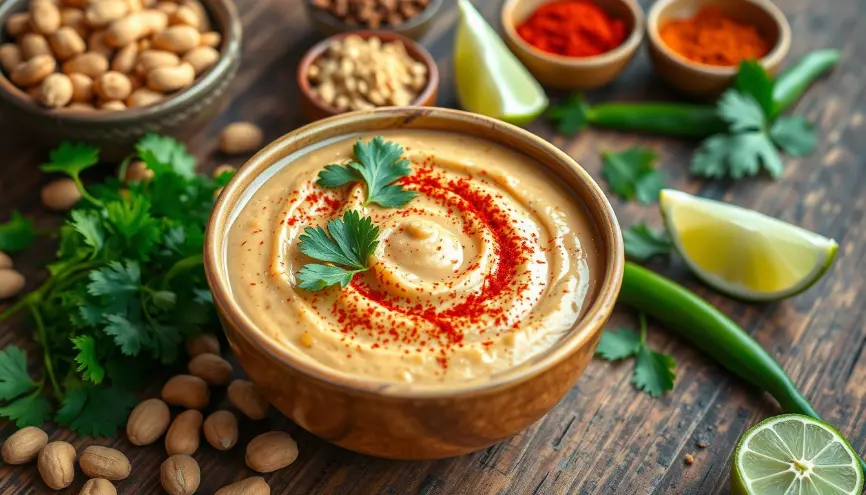
Ever wondered why peanut chutney recipe is so loved in South Indian cuisine? It’s not just a simple condiment. It turns regular snacks and meals into something truly special. In this guide, you’ll learn the secrets of the best peanut chutney recipe, with 7.0K shares to prove its popularity. Are you ready to start a flavorful journey that will make your cooking shine and your taste buds happy?

Key Takeaways
- The traditional peanut chutney recipe features 6 essential ingredients including roasted peanuts and tamarind.
- Variations of peanut chutney include basic Andhra style, mint peanut chutney, and onion groundnut chutney.
- Roasting peanuts on medium to low heat is crucial for an aromatic flavor.
- Peanut chutney recipe is typically best served fresh, with a shelf life of 2 to 3 hours.
- Preparation tips suggest making ingredients ready the night prior for convenience.
Introduction to Peanut Chutney
Peanut chutney recipe is a tasty peanut chutney loved worldwide, not just in India. It’s a favorite in South Indian meals, like idli and dosa. In Maharashtra, it’s a key part of daily meals, served with other dishes.
This authentic peanut chutney recipe is loved for its variety. Different parts of India have their own versions, using local ingredients. North Indian chutneys are wet, while South Indian ones are chunky, made with roasted nuts and spices.
The classic recipe uses 500 grams of roasted peanuts, cumin seeds, and spices. This mix creates a healthy condiment, rich in protein. The cumin adds a cooling touch, perfect for hot climates.
In short, peanut chutney is more than a side dish. It’s a symbol of cultural heritage and adds flavor to any meal. Its health benefits and versatility make it a favorite at any table.
What is Peanut Chutney Recipe?
Peanut chutney recipe is known for its rich, nutty flavor and creamy texture. It’s a staple in Andhra Pradesh and Southern India. It’s also called groundnut chutney, Palli chutney, and more. Making it involves blending roasted peanuts with spices and herbs.
Understanding Groundnut Chutney
To make groundnut chutney, you start with roasted peanuts. You add garlic, onions, and spices like dry red chillies and tamarind. Jaggery is also used to enhance the flavor.
This mix not only tastes great but also offers health benefits. You can thicken it by refrigerating it. It stays good in the fridge for 2 to 3 days. It’s perfect with idli, dosa, vada, and rice.

Health Benefits of Peanuts
Peanuts are packed with nutrition. They have protein, healthy fats, vitamins, and minerals. A serving of peanut chutney has 101 calories, 8g carbs, 1g protein, and 7g fat.
Eating this chutney can boost your energy and heart health. It also helps with weight management. You can make it healthier by adding mint leaves or tomatoes and trying new flavors.
Ingredients for Peanut Chutney Recipe
Making the perfect peanut chutney recipe needs careful picking of ingredients. Knowing the must-haves and optional extras helps you cook better. The peanut chutney recipe ingredients should work together for a great taste.
Essential Ingredients Overview
The heart of a good peanut chutney is its main ingredients. These include:
- Peanuts: The main attraction, bringing flavor and health benefits.
- Chana dal: Adds texture and makes it thicker.
- Urad dal: Boosts the savory taste.
- Garlic: Gives a strong smell and taste.
- Green chili pepper: Adds heat and zest.
- Curry leaves: Brings a special South Indian taste.
- Tamarind paste: Balances with a tangy flavor.
- Mustard seeds: Adds a slight crunch and warm taste.
- Hing (asafoetida): Helps with digestion and flavor depth.
- Dried red chili whole: Adds more heat and flavor.
Optional Ingredients for Variations
For tasty variations, try adding these easy peanut chutney recipe ingredients:
- Cilantro: Adds freshness.
- Coconut: Brings sweetness and richness.
- Ginger: Offers a warm spice.
- Red chili: For extra heat.
- Sesame seeds: Adds a nutty taste and crunch.
- Lime juice or yogurt (curd): Alternatives to tamarind, adding acidity and creaminess.

With these essential and optional ingredients, you can make your peanut chutney your way. Have fun trying different versions to find your favorite!
Preparation Steps for Making Peanut Chutney Recipe
To make a delicious peanut chutney, start with key steps. These steps are important for a tasty chutney. They include roasting peanuts and preparing other ingredients.
Roasting the Peanuts
First, roast the peanuts. Use low to medium heat and stir often. This makes them golden brown without burning. It’s important for a nutty flavor.
Other Ingredient Preparations
Then, prepare ingredients like dry red chilies, garlic, and ginger. Sauté them in oil to release their flavors. Mixing them with roasted peanuts makes a flavorful mix. Blending everything into a smooth paste creates a rich chutney.
| Ingredient | Quantity |
|---|---|
| Peanuts | 1 cup |
| Dry red chilies | 2-3 |
| Garlic cloves | 2 |
| Ginger | 1 inch piece |
| Tamarind | 1-2 tsp |
| Salt | to taste |
| Oil for tempering | 1-2 tsp |
| Mustard seeds | 1 tsp |
| Curry leaves | 8-10 |
With these steps, you’re ready to enjoy a tasty peanut chutney. This method ensures vibrant flavors and boosts nutrition. It’s a great addition to your meals.
Cooking Techniques to Enhance Flavor
Learning about cooking techniques can really boost your peanut chutney game. The right methods turn simple ingredients into a tasty condiment. We’ll look at some techniques to make your peanut chutney a hit at any meal.
Tempering Techniques Explained
Tempering is a traditional way to make peanut chutney taste better. It involves frying spices like mustard seeds, dried red chilies, and curry leaves in hot oil. This lets the flavors mix well. Here’s how to do it right:
- Heat oil in a small pan over medium heat.
- Add mustard seeds and wait for them to pop.
- Introduce dried red chilies for color and heat, followed by curry leaves for herbal notes.
- Mix the tempering into the chutney just before serving for the best flavor profile.
Using Fresh Herbs for Extra Flavor
Fresh herbs can really spice up your peanut chutney. Herbs like mint and coriander add a cool twist that complements peanuts. Here are some tips for using fresh herbs:
- Chop herbs finely to ensure an even distribution throughout the chutney.
- Add fresh herbs just before serving to maintain their vibrant color and aroma.
- Experiment with herb combinations to find a flavor profile that suits your palate.
| Technique | Description | Benefits |
|---|---|---|
| Tempering | Frying spices in oil | Enhances aroma and adds depth |
| Fresh Herbs | Incorporating herbs like mint and coriander | Adds freshness and complexity |
Using these techniques will surely make your dish more flavorful. It’ll become a favorite at your table. Have fun trying out different recipes and finding your perfect chutney!
Peanut Chutney Recipe: A Step-by-Step Guide
To start making this peanut chutney, first get your ingredients ready. You’ll need peanuts, onions, garlic, red chilies, tamarind, jaggery, and salt. Each one is important for the right taste.
First, toast the peanuts. Do this over medium heat until they’re golden. Make sure not to burn them to avoid bitterness. Use fresh, skinless peanuts for the best taste.
Then, chop the onions and garlic finely. Also, chop the red chilies without seeds to control the heat. This makes the chutney blend better and smoother.
After preparing your ingredients, blend the toasted peanuts, onions, garlic, and red chilies together. Add a small piece of tamarind and some jaggery for flavor. Blend until it’s creamy. You can also add tomatoes for a tangy twist.
Remember the tempering step is key for flavor. Heat oil in a pan and add mustard seeds, urad dal, hing, and curry leaves. When the seeds crackle, pour this over your peanut mix.
After mixing well, taste the chutney. Add more salt, tamarind, or jaggery if needed. Now it’s ready to serve, great with idli or dosa.
This guide makes it easy to make peanut chutney. You can enjoy its creamy, nutty taste with your favorite dishes.
Serving Suggestions for Peanut Chutney
Peanut chutney is a versatile side dish that adds flavor to many meals. It can turn simple dishes into exciting culinary experiences. You can serve it in many creative ways.
Best Dishes to Pair With Peanut Chutney
This chutney goes well with South Indian classics like:
- Idli
- Dosa
- Upma
- Paniyaram
It brings out the best in these dishes. It creates a perfect mix of textures and tastes.
Creative Uses for Peanut Chutney
There are many ways to use peanut chutney beyond traditional dishes:
- Spread on sandwiches for a nutty twist
- As a tasty dip for vegetable pakoras
- In wraps or rolls, complementing meat or vegetables
- Add to salads for an interesting dressing
These ideas not only make your meals better. They also help you use up all your peanut chutney.
| Dish | Recommended Use |
|---|---|
| Idli | Dip |
| Dosa | Spread |
| Pakoras | Dipping Sauce |
| Wraps | Filling |
Storing and Shelf Life of Peanut Chutney
Keeping peanut chutney fresh is key to enjoying its taste. Made from top-notch peanuts, it brings a unique flavor to many dishes. Knowing how to store it right ensures you enjoy every bite.
Best Storage Practices
For the best storage, put your peanut chutney in an airtight container in the fridge. This keeps air and moisture out, keeping the chutney’s taste and texture perfect. Before you serve it, let it come to room temperature. This step makes it taste even better. Here are some extra tips:
- Cool the chutney to room temperature before placing it in the refrigerator.
- Consider thinning the chutney with a little water if it thickens during refrigeration.
- For longer storage, freezing is an excellent option, allowing you to enjoy peanut chutney for up to 2 to 3 months.
How Long Does Peanut Chutney Last?
Peanut chutney usually lasts 3 to 5 days in the fridge. Recipes with shallots or tamarind might change this time. Freezing it keeps it fresh for up to 2 to 3 months. When you thaw it, it might get a bit softer, but it’s still safe and tasty.
| Storage Method | Shelf Life |
|---|---|
| Refrigerator | 3-5 days |
| Freezer | 2-3 months |
Variations of Peanut Chutney
Exploring different peanut chutney variations can add new flavors and textures to your meals. Each recipe has its own special taste, letting you tailor your dishes. This section will guide you through making a couple of tasty variations.
Mint Peanut Chutney
This version of peanut chutney adds a cool twist with fresh mint leaves. It’s great as a dip or spread. Here’s how to make it:
- Roast the peanuts until golden brown.
- Add fresh mint leaves, garlic, and green chilies to your blender.
- Include jaggery or sugar for a hint of sweetness.
- Blend until smooth, adding water as needed to achieve the desired consistency.
This chutney is perfect with dosa, uttapam, or as a salad dressing. It makes simple meals more exciting, showing how versatile peanut chutney can be.
Onion Groundnut Chutney
This version adds onions for a sweet depth. It’s great with South Indian snacks, offering a unique taste. Here’s how to make it:
- Start by lightly roasting the peanuts for an even flavor.
- Add chopped onions and blend them along with garlic, tamarind, and spices.
- Adjust the seasoning with salt and chillies to your taste.
Onion groundnut chutney is amazing with idlis or plain parathas. It’s a standout among peanut chutney variations.
| Variation | Main Ingredients | Suggested Pairings |
|---|---|---|
| Mint Peanut Chutney | Peanuts, Mint, Garlic, Green Chilies | Dosa, Uttapam, Salads |
| Onion Groundnut Chutney | Peanuts, Onions, Tamarind, Spices | Idlis, Parathas |
Trying out these variations can help you find your favorite peanut chutney recipes. Enjoy making these tasty condiments and exploring new flavors!
Common Mistakes to Avoid When Making Peanut Chutney
Making the perfect peanut chutney can be fun, but it comes with its own set of challenges. Knowing how to avoid common mistakes can greatly improve the taste and texture of your chutney. Here are some errors to watch out for:
- Under-roasting peanuts: Peanuts need to be roasted well to bring out their flavor. If they’re not roasted enough, the chutney might taste bland.
- Ignoring spice balance: Not getting the spice levels right can make the flavor too strong. Always taste and adjust as you go.
- Using rancid peanuts: Fresh peanuts are key to a great taste. Old or rancid peanuts can ruin your chutney.
- Insufficient blending: Make sure the mixture is smooth and fine. A chunky chutney can be off-putting.
- Neglecting the tempering process: Tempering adds depth to the flavor. Skipping it can make the chutney taste less rich.
By avoiding these common mistakes, you can make a delicious peanut chutney. Making informed choices will improve your cooking skills and make the process more enjoyable.
| Mistake | Consequences | Solution |
|---|---|---|
| Under-roasting peanuts | Bland flavor | Ensure peanuts are lightly browned |
| Ignoring spice balance | Overpowering or weak taste | Taste and adjust spices as needed |
| Using rancid peanuts | Spoiled taste | Buy fresh, high-quality peanuts |
| Insufficient blending | Chunky texture | Blend until smooth and creamy |
| Neglecting tempering | Lack of flavor complexity | Incorporate tempering for enhanced taste |
Tips for Perfecting Your Peanut Chutney Recipe
Making a tasty peanut chutney is more than just a recipe. It’s about paying attention to details and adding your own touch. Here are some tips to help you make your peanut chutney stand out.
Choosing Quality Peanuts
Choosing the right peanuts is key. Go for fresh, high-quality raw or roasted peanuts. Their flavor greatly affects the chutney’s taste. Try to find organic peanuts when you can.
Some people choose to remove the peanut skins. This can help avoid bitterness from the tannins in the skins. It can make the chutney taste better overall.
Adjusting Spice Levels
Your personal taste matters a lot in making the perfect peanut chutney. Start with a moderate amount of green chilies and add more if you like it spicier. You can swap green chilies for red ones for a different taste.
Remember, finding the right balance of spices is important. Using ingredients like tamarind can add a nice mix of spicy and sour flavors to your chutney.
Conclusion
Making peanut chutney is a fun and rewarding process. It adds a burst of flavor to your meals. This recipe combines the rich taste of peanuts with Indian spices, making it perfect for many dishes.
It’s easy to make, starting with roasting peanuts. Then, blend them with red chilies, tamarind paste, and spices. You can also try different variations by adding fresh herbs or coconut.
Peanut chutney is not just tasty; it’s also healthy. It has 14 grams of protein and good fats per serving. Adding it to your meals makes them more flavorful and nutritious. So, explore this world of flavors and enjoy the peanut chutney that everyone will love.
Frequently Asked Questions