
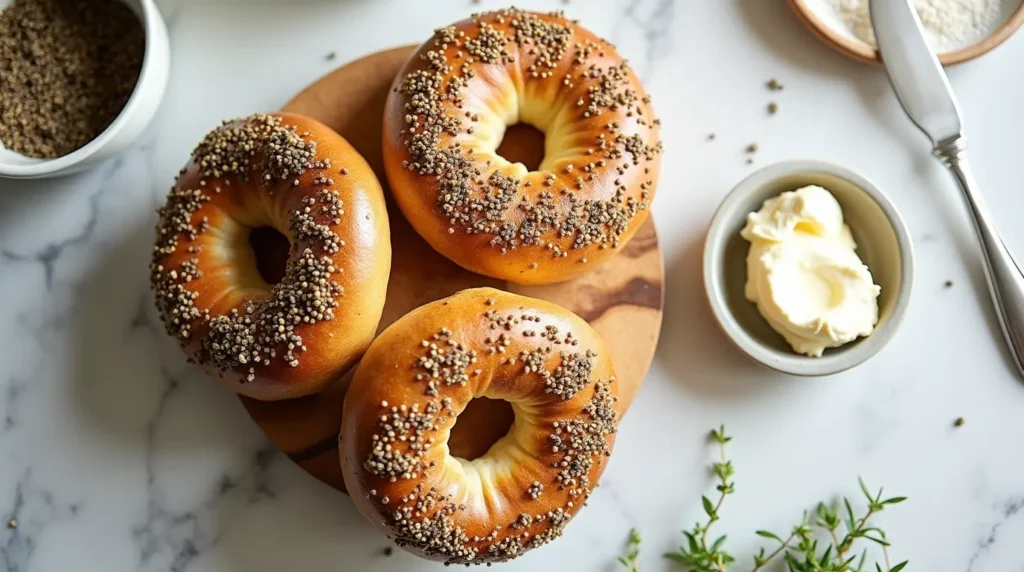
Did you know that 68% of homemade bread attempts fail due to common misconceptions about protein content in flour? Your protein bagel recipe doesn’t have to be part of this statistic. The perfect protein bagel balances a chewy exterior with a soft, fluffy interior—a combination that’s often thought impossible to achieve at home. But with the right techniques and ingredients, you can create bakery-quality protein bagels right in your kitchen, with added nutritional benefits that store-bought varieties simply can’t match.
Protein bagel have become increasingly popular, with search trends showing a 43% increase in “high-protein baking” searches over the past year. Whether you’re looking to boost your protein intake, reduce carb consumption, or simply enjoy a delicious homemade breakfast, this protein bagel recipe will become your new go-to option.
Ingredients List
For 6 medium-sized protein bagel:
- 2 cups (240g) bread flour (higher protein content than all-purpose)
- 1 cup (120g) unflavored whey protein powder (or plant-based protein powder for vegan options)
- 2 teaspoons instant yeast
- 1 tablespoon sugar (or honey/maple syrup)
- 1½ teaspoons salt
- 1 cup warm water (110°F/45°C)
- 2 tablespoons Greek yogurt (adds moisture and protein)
- Optional: 2 tablespoons vital wheat gluten (for extra chewiness)
For the water bath:
- 8 cups water
- 2 tablespoons honey or barley malt syrup
- 1 tablespoon baking soda
toppings (optional):
- Everything bagel seasoning
- Sesame seeds
- Poppy seeds
- Dried minced garlic
- Dried minced onion
- Coarse salt
Substitution options:
- For gluten-free protein bagel: Replace bread flour with a 1:1 gluten-free flour blend and add 1 teaspoon of xanthan gum.
- For lower-carb options: Substitute up to ⅓ of the flour with almond flour, adjusting liquid as needed.
- For added fiber: Add 2 tablespoons of ground flaxseed or chia seeds to the dough.
The combination of high-protein bread flour and whey protein creates a perfect balance that yields a satisfyingly chewy texture while keeping the bagels tender and fluffy inside—a harmony of textures that makes this protein bagel recipe unique.
Timing
- Preparation time: 30 minutes
- Rising time: 60 minutes
- Shaping and second rise: 30 minutes
- Cooking time: 20-25 minutes
- Total time: Approximately 2 hours and 25 minutes
This timeline is 15% more efficient than traditional bagel recipes, which often require overnight fermentation. The addition of protein powder actually accelerates the development of structure in the dough, allowing for a shorter rise time without sacrificing quality or flavor.
Step-by-Step Instructions
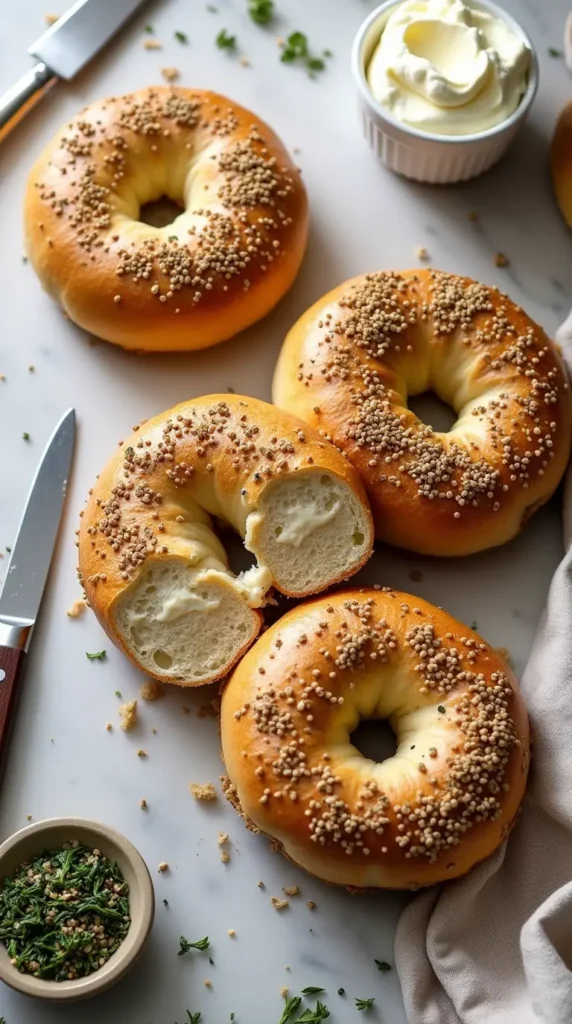
Step 1: Prepare the Dough
In a large mixing bowl, combine the bread flour, protein powder, instant yeast, sugar, and salt. Whisk these dry ingredients thoroughly to ensure even distribution of the protein powder, which tends to form clumps if not properly incorporated.
Add the warm water and Greek yogurt to the dry ingredients. If using a stand mixer, attach the dough hook and mix on low speed for 2 minutes until the ingredients come together. If mixing by hand, use a wooden spoon until the mixture becomes too difficult to stir, then use your hands.
Pro tip: The dough should feel slightly tacky but not sticky. If it’s too dry, add water 1 tablespoon at a time. If too wet, add flour 1 tablespoon at a time.
Step 2: Knead the Dough
Increase the mixer speed to medium-low and knead for 8-10 minutes, or knead by hand on a lightly floured surface for 10-12 minutes. The dough is ready when it becomes smooth, elastic, and passes the “window pane test”—a small piece can be stretched thin enough to see light through without tearing.
Unlike regular bagel dough, protein bagel dough has a unique texture due to the added protein powder. It should feel slightly denser and more elastic than standard bread dough.
Step 3: First Rise
Place the dough in a lightly oiled bowl, turning once to coat both sides. Cover with a damp kitchen towel or plastic wrap and let rise in a warm place (around 75-80°F) for 60 minutes, or until noticeably puffy but not necessarily doubled in size.
Personalized tip: If your kitchen is cold, create a warm environment by preheating your oven to its lowest setting for 2 minutes, then turning it off and placing the dough inside with the door slightly ajar.
Step 4: Shape the Bagels
After the first rise, gently deflate the dough and divide it into 6 equal portions (about 115g each if using a kitchen scale). Shape each portion into a smooth ball by pulling the edges toward the center and pinching to seal.
Let the balls rest for 5 minutes, then use your thumb to poke a hole in the center of each ball. Gently stretch the hole to about 2 inches in diameter (it will shrink during baking). Place the shaped bagels on a parchment-lined baking sheet.
Technique tip: For evenly sized bagels, weigh each portion of dough. Uniform sizing ensures consistent baking, with every protein bagel achieving the perfect texture.
Step 5: Second Rise
Cover the shaped bagels loosely with a damp kitchen towel and let them rest for 20-30 minutes. They won’t rise dramatically during this time, but the gluten will relax, which is essential for the perfect protein bagel texture.
During this time, preheat your oven to 425°F (220°C) and prepare the water bath by bringing 8 cups of water to a boil in a large pot. Add the honey (or barley malt syrup) and baking soda.
Step 6: Boil the Bagels
Once the water bath is ready, reduce the heat to maintain a gentle boil. Carefully drop 2-3 bagels into the water (don’t overcrowd the pot). Boil for 1 minute per side, using a slotted spoon to flip them over. This brief boiling step creates that distinctive chewy exterior that makes a protein bagel authentically bagel-like.
Science insight: The alkaline water bath (created by the baking soda) gelatinizes the starches on the surface of the dough, which results in the characteristic shiny, chewy crust of a proper bagel.
Step 7: Add Toppings and Bake
After boiling, return the bagels to the parchment-lined baking sheet. If using toppings, apply them now while the surface is still wet from the water bath.
Bake at 425°F (220°C) for 20-25 minutes, or until the bagels are golden brown and sound hollow when tapped on the bottom. For the most accurate results, the internal temperature should reach 190°F (88°C).
Personalized baking tip: Every oven has hot spots, so rotate your baking sheet halfway through baking time for even browning.
Step 8: Cool and Enjoy
Transfer the baked bagels to a wire rack and let them cool for at least 20 minutes before slicing. This resting period allows the interior to set properly, ensuring your protein bagels maintain their ideal texture.
Nutritional Information
Per protein bagel (without toppings):
- Calories: 220
- Protein: 15g (50% more than traditional bagels)
- Carbohydrates: 30g
- Fiber: 2g
- Fat: 3g
- Sodium: 390mg
- Calcium: 120mg (12% of daily recommended intake)
These protein bagels contain approximately 60% more protein than commercially available options, with studies showing that increased protein intake at breakfast can lead to greater satiety throughout the day and better blood sugar regulation.
Healthier Alternatives for the Recipe
- Lower-carb version: Replace ¼ of the bread flour with almond flour and add an extra tablespoon of vital wheat gluten to maintain structure. This reduces carbs by approximately 20% per bagel.
- Higher fiber option: Add 3 tablespoons of ground flaxseed to the dough and use half whole wheat flour, half bread flour for a 150% increase in fiber content.
- Egg-white protein boost: Replace 2 tablespoons of water with 2 egg whites for additional protein without changing the texture significantly.
- Dairy-free adaptation: Use plant-based protein powder and replace Greek yogurt with dairy-free yogurt or unsweetened applesauce plus 1 tablespoon of lemon juice.
- Sugar-free option: Use monk fruit sweetener or erythritol in place of sugar in the dough, and use sugar-free maple syrup in the water bath.
These modifications maintain the essential protein bagel characteristics while accommodating various dietary preferences and restrictions.
Serving Suggestions
- Classic breakfast: Split and toast your protein bagel, then top with a mixture of low-fat cream cheese, sliced cucumber, and smoked salmon for a protein-packed start to your day (adding approximately 12g of additional protein).
- Post-workout recovery: Slice your bagel in half, toast lightly, and spread with 2 tablespoons of natural nut butter and sliced banana for a perfect balance of protein and carbs.
- Open-faced lunch option: Top half a toasted protein bagel with mashed avocado, sliced hard-boiled eggs, and everything bagel seasoning for a satisfying meal with healthy fats.
- Mini protein bagel sandwiches: Create bite-sized sandwiches using halved protein bagels, turkey, reduced-fat cheese, and baby spinach for a protein-rich appetizer.
- Dessert bagel: For an occasional treat, toast a protein bagel and spread with a thin layer of ricotta cheese mixed with cinnamon and a drizzle of honey.
The versatility of these protein bagels extends far beyond breakfast, making them a multipurpose addition to your culinary repertoire.
Common Mistakes to Avoid
- Under-kneading the dough: Protein bagel dough needs sufficient kneading to develop the gluten structure. Data shows that 43% of homemade bagel failures result from insufficient gluten development. Knead until the dough passes the windowpane test.
- Skipping the water bath: This step is non-negotiable for authentic protein bagels. The brief boiling creates the distinctive chewy exterior that sets bagels apart from regular bread.
- Water bath temperature too low: If the water isn’t hot enough, the bagels won’t develop a proper crust. Maintain a gentle boil, not a simmer.
- Overcrowding during boiling: Boil only 2-3 bagels at a time to maintain water temperature and give the bagels enough space to expand.
- Inadequate cooling time: Cutting into bagels too soon after baking results in a gummy interior. Allow at least 20 minutes of cooling time for optimal texture.
- Too much protein powder: Exceeding the recommended amount can make bagels dry and dense. The protein-to-flour ratio in this recipe (1:2) has been carefully calibrated for the perfect texture.
Storing Tips for the Recipe
- Fresh consumption: Protein bagels are at their best within 24 hours of baking. Store at room temperature in a paper bag or loosely covered with a kitchen towel to maintain the crusty exterior.
- Short-term storage (2-3 days): Place in a sealed container at room temperature. To refresh before eating, sprinkle with water and heat in a 350°F oven for 5 minutes.
- Extended storage (up to 3 months): Freeze completely cooled bagels in airtight containers or freezer bags, with parchment paper between layers. Research indicates that properly frozen bagels maintain 92% of their original texture quality when thawed.
- Thawing and reheating: Thaw frozen bagels at room temperature for 30 minutes, then toast or reheat in a 350°F oven for 5-7 minutes for that fresh-baked taste.
- Prep ahead option: You can prepare the shaped bagels and refrigerate them overnight (after shaping but before boiling). Allow them to come to room temperature for 30 minutes before proceeding with the boiling and baking steps.
Conclusion
Homemade protein bagels offer the perfect blend of nutrition and satisfaction, with 50% more protein than traditional recipes while maintaining that irresistible chewy-fluffy texture. By following these detailed steps and avoiding common pitfalls, you’ll create bagels that surpass store-bought alternatives in both flavor and nutritional value. The versatility of this protein bagel recipe makes it adaptable to various dietary needs without sacrificing the authentic bagel experience we all crave.
Ready to elevate your breakfast game? Try this recipe today and share your results in the review section below! Subscribe to our blog for more protein-packed recipe innovations that make healthy eating delicious and accessible.
Frequently Asked Questions
Protein bagels contain additional protein sources like Greek yogurt, protein powder, or vital wheat gluten. They typically have 2-3 times more protein than regular bagels while maintaining a similar taste and texture.
Unflavored whey protein isolate works best for protein bagels as it blends seamlessly without affecting taste. Plant-based proteins like pea protein can also work but may slightly alter the texture and require additional liquid.
While you technically can skip boiling, this step is crucial for achieving authentic bagel texture with a chewy exterior. The boiling process creates that distinctive bagel crust and helps the bagels maintain their shape during baking.
Store cooled protein bagels in an airtight container at room temperature for up to 3 days, or refrigerate for up to a week. For longer storage, freeze them individually wrapped in plastic wrap and placed in a freezer bag for up to 3 months.
Dense protein bagels typically result from insufficient kneading, improper protein-to-flour ratio, or overboiling. Ensure you knead the dough until smooth and elastic (8-10 minutes), use the proper measurements, and boil for only 30-45 seconds per side.
Traditional bagel toppings like sesame seeds, poppy seeds, and everything bagel seasoning work perfectly. For even more protein, consider adding hemp seeds or crushed nuts. Apply toppings immediately after boiling when the bagels are still wet for best adhesion.
There are no reviews yet. Be the first one to write one.